


Welcome to April, guys!
I just watched the launch of Artemis II. Wow. What a beautiful way to start this month. Humans: we are so, so wonderful and beautiful and capable of so much when we work together.
Here’s what we’ve got in this newsletter:
🤔 A thought I’m processing [on attachment to God]
💕 A [journaling exercise] I’m loving
🗳️ A poll [on rest]
🔗 Some link love [from this past month]
📆 A full recap & links to this past month’s posts
April’s free resource: [attachment to God]
🤔 A thought I’m processing [on attachment]
I have a sort of a simple framework I use to think through attachment in relationships (including God). It’s an oversimplification of attachment, but on a basic level, it involves three pieces: (1) how you view yourself, (2) how you view the other person, (3) how you view the relationship.
Anxious attachment happens when you have a LOW level of trust in yourself but a HIGH level of trust in others. You feel like you need them to be safe. You have a HIGH value of the bond of the relationship, but it feels UNSTABLE (so you frequently panic that you’re being left).
Avoidant attachment is when you have a HIGH level of trust in self but a LOW level of trust in others. You feel like you can’t rely on them. You have a LOW/NEUTRAL value of the bond of relationship. (You behave as if you are fine without it).
Secure attachment is when you have a HIGH level of trust in yourself, and a HIGH level of trust in your partner. You have a HIGH value for the bond, and it also feels STABLE to you.
Disorganized attachment is when you have a LOW level of trust in yourself, and a LOW level of trust in others. You can have a HIGH or LOW value for the bond depending on the day, and it often feels UNSTABLE.
When I think about most of the way we interact with God, it seems like in most churches we’ve got some pretty intense Anxious attachment going on. My hunch is that this developed in response to watching people operate like Avoidants with God (we’re fine without Him; we don’t trust Him). The church compensated by emphasizing our frailty. But, in many churches, they went a little further than just describing our fallibility and humanity.
My hope is that we would begin to believe that trusting and valuing ourselves is NOT a threat to our attachment to God. Your relationship with God does not DEPEND on you feeling worthless. It isn’t contingent on hating yourself.
(For those of you who are paid subscribers, I’ve attached a free worksheet that you can use to explore your attachment with God through this framework at the bottom of this newsletter. LMK how it goes!)
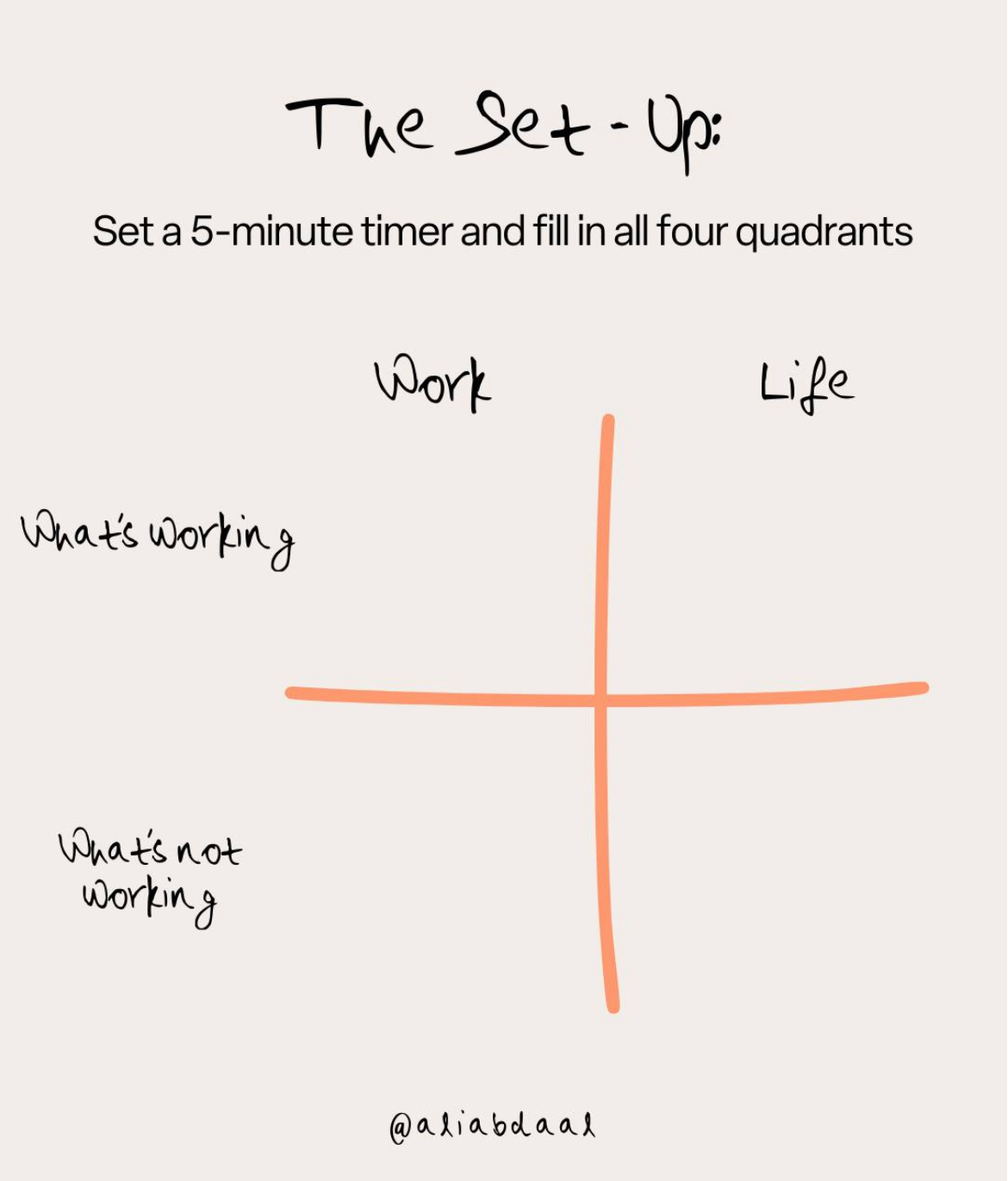
❤️ A [journaling exercise] I’m loving
Love this journaling exercise from @Aliabdaal - and when you do it (if you do it) - one of the ‘rules’ is “you must have 3x as many things in the ‘what’s working’ column than in the ‘what’s not working’ column. That’s a great way to help your brain compensate for its negative bias.
🗳️ A poll on [on rest]
Here’s the poll for this month:
🔗 Some link love
Here are some links I’ve been loving this past month:
📆 What you missed in March
Below are some links to thoughts I’ve shared this past month! (Please note that some of my messier thoughts and musings are behind a paywall. You can read more about why I do that here, and feel free to upgrade your subscription to access them and support my research!)
Control: the abuse prevention strategy that makes abuse worse - 5 problematic narratives that keep churches from responding effectively to abuse
What if this isn’t a breakdown, but an invitation? (The Psychology of the Midlife Crisis)
Some thoughts on finding true things to tell yourself, noticing nature, stress & planner layouts
🆓 The free resource for April is below (for paid subscribers!)
